
Strava retains users through segment leaderboards, KOM and Local Legend achievements, Kudos, time-bound challenges, Clubs and weekly streaks. Trophy's Gamification Intelligence Report 2026, built on 1.5M+ users across apps on Trophy's platform, found competition on repeating leaderboards is 3.4x higher than on perpetual ones, with top-10% ranks changing 8x more often. Strava gets a similar result differently: it splits one global ranking into thousands of local ones, so an average user still has a ranking they can realistically win. This post breaks down each mechanic and how to build the equivalent with Trophy's Leaderboards, Achievements and Streaks APIs.
| Leaderboard type | Displacement (users overtaken) | Winner retention (next day) |
|---|---|---|
| Perpetual | 5.4% | 91.2% |
| Repeating | 18.2% | 11.3% |
Source: Trophy's Gamification Intelligence Report 2026. Repeating leaderboards reset on a schedule; perpetual leaderboards are all-time rankings.
Strava is the most fully realised example of fitness gamification in any consumer app. It is also one of the more instructive, because the system works across a genuinely wide range of user types from elite cyclists defending King of the Mountain titles to casual runners who have never cracked a top-ten segment ranking.
This post examines why the architecture holds together across that range, what Trophy's platform data shows about the mechanisms that drive it, and what product teams building in the fitness or wellness category can take from it.
Segments: Solving The Global Leaderboard Problem
The central design insight behind Strava's gamification is the Segment. Rather than ranking all athletes on a single global leaderboard — where a runner placing 50,000th globally has no meaningful competitive context — Strava decomposes competition into thousands of hyper-local, context-specific rankings. Every named stretch of road or trail becomes its own competitive arena, and the leaderboard for that segment contains only the athletes who have actually run or ridden it.
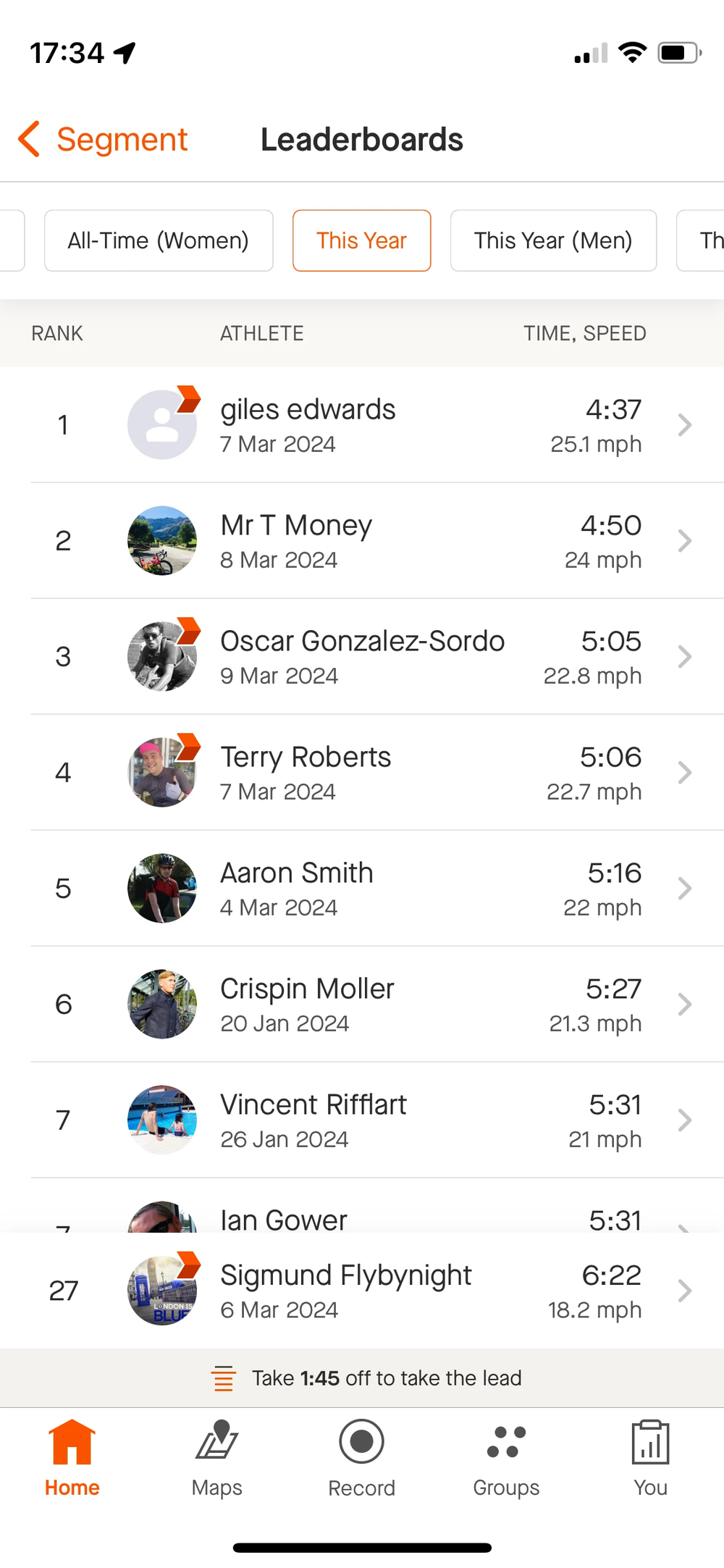
The effect of this decomposition is that competitive achievability scales with the user's context rather than their absolute ability. A cyclist who is average by any global measure can be the fastest person in their neighbourhood on a specific climb. That local KOM carries genuine meaning in their social network even if it registers nowhere on a platform-wide ranking. Strava has essentially replaced one large demotivating leaderboard with millions of small motivating ones.
Trophy's Leaderboards API supports the same approach: breakdowns group users by any custom user attribute, such as city or region, and each group gets its own ranking.
For a deeper look at how segmented leaderboards work mechanically and how to build them, see our guide to Strava's segmented leaderboard approach.
The KOM/Local Legend: Serving Two User Archetypes
Within the segment system, Strava has built two distinct achievement tiers that serve fundamentally different motivations.
The KOM and QOM — King and Queen of the Mountain — go to the athlete with the fastest recorded time on a segment. They are explicitly performance-based, they can be taken by anyone who goes faster, and holding one in a competitive area requires repeatedly defending it against challengers. The retention mechanism here is loss aversion at the highest difficulty level: Trophy's achievement data shows that users completing achievements in the hardest difficulty bucket retain at 74.2%, compared to 32.3% for the easiest bucket. The KOM activates that effect for Strava's most competitive users.
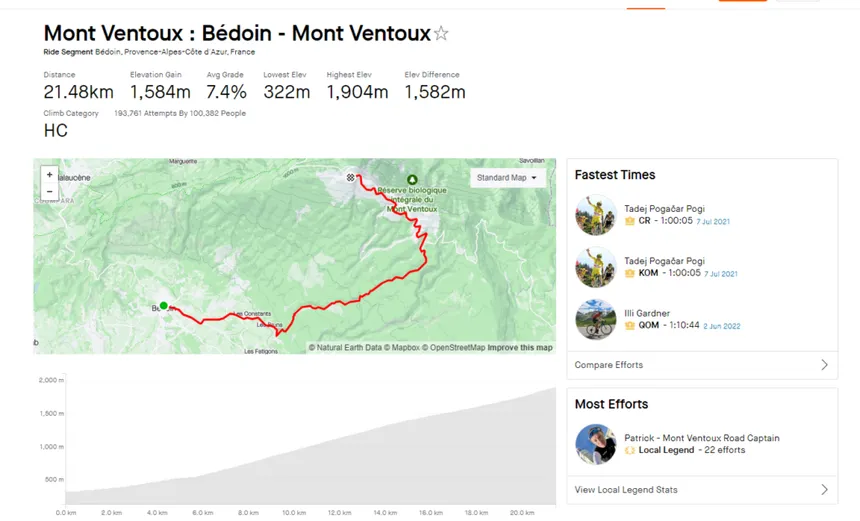
Local Legend, launched in 2020, is the structural counterpart. It goes to whoever has completed a segment more times than anyone else in a rolling 90-day window — consistency, not speed. Any athlete willing to return to the same route more than their neighbours can hold it, regardless of pace. This creates a meaningful competitive target for the large portion of Strava's user base who will never contend for a KOM, and it rewards the frequency of engagement that is most directly valuable to retention.
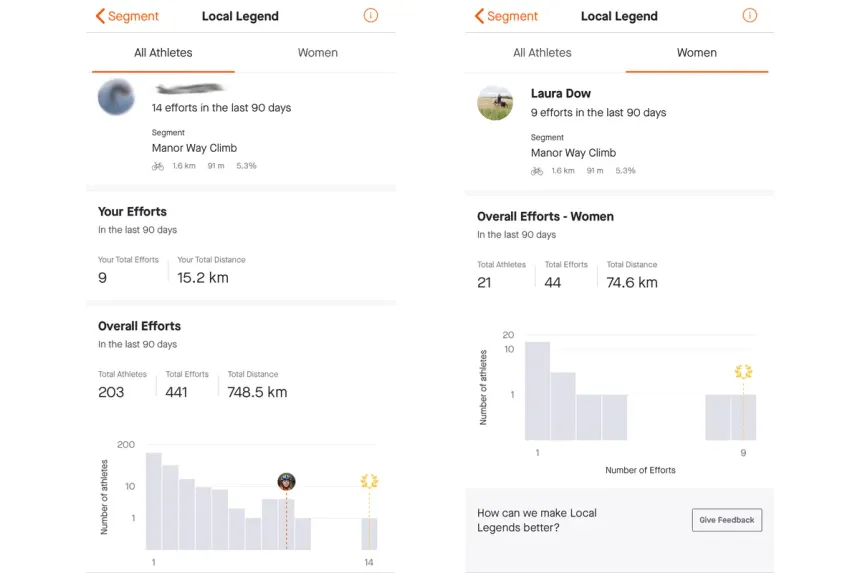
The two tiers together are why Strava's gamification scales across ability levels in a way that most competitive systems do not. A product that only rewards top performers gradually loses everyone else. A product that only rewards participation loses the users who care most about competition. Strava's architecture gives both groups something worth protecting.
Trophy's Achievements API supports both tiers: metric achievements that unlock at activity thresholds for a consistency tier, and API achievements your app awards for harder, performance-based goals.
How To Build Strava-Style Mechanics With Trophy
Three of Strava's mechanics map directly to Trophy features:
| Strava mechanic | Trophy feature | How it works |
|---|---|---|
| Segment leaderboards | Leaderboards with breakdowns | Group users by custom attributes such as city or region; each group ranks separately |
| KOM / Local Legend tiers | Achievements | Metric achievements for activity thresholds, API achievements for one-time actions |
| Weekly consistency streak | Streaks | Weekly frequency, with optional streak freezes |
Kudos and Clubs depend on your own social graph, so they stay in your app. Trophy supplies the ranking, achievement and streak layer. See the docs for integration.
Kudos: Closing Social Loop, Driving Return Visits
Strava's Kudos mechanic — a simple social acknowledgement, roughly equivalent to a like on a post — is one of the more under-appreciated elements of the gamification system. When a user records an activity and shares it, receiving Kudos from followers creates a social validation loop that goes beyond what the activity data alone provides. The run happened regardless of whether anyone acknowledges it. The Kudos confirms that the community noticed.
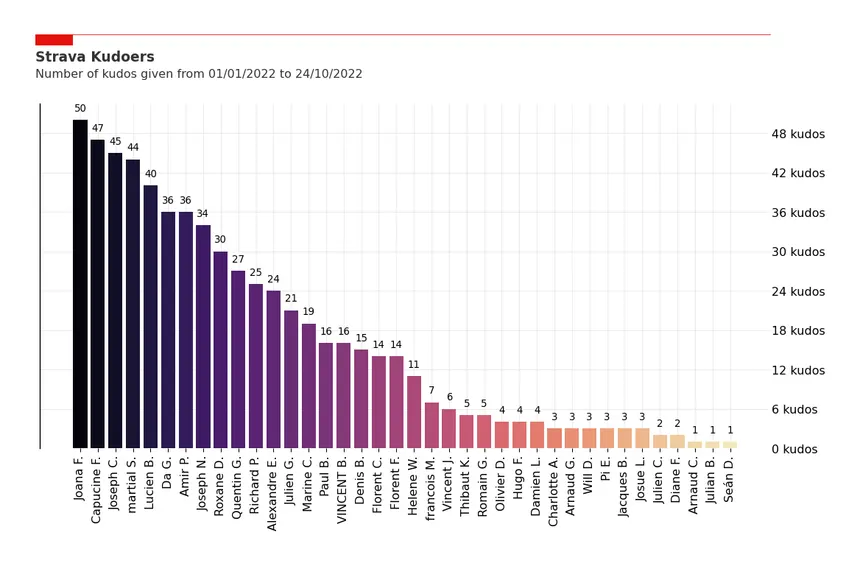
Having an audience for your activity changes behaviour. Users who know their workouts are visible to people whose opinions matter to them behave differently from users tracking in private — not always more ambitiously, but more consistently.
Challenges: Time-bound Goals For Fitness's Episodic Nature
Strava's challenge system offers time-limited goals (e.g. run a certain distance within a month, climb a specific amount of elevation within a week) that users can opt into and track progress against. Many are sponsored by brands, adding tangible rewards like discounts or exclusive gear alongside the digital badge awarded on completion.
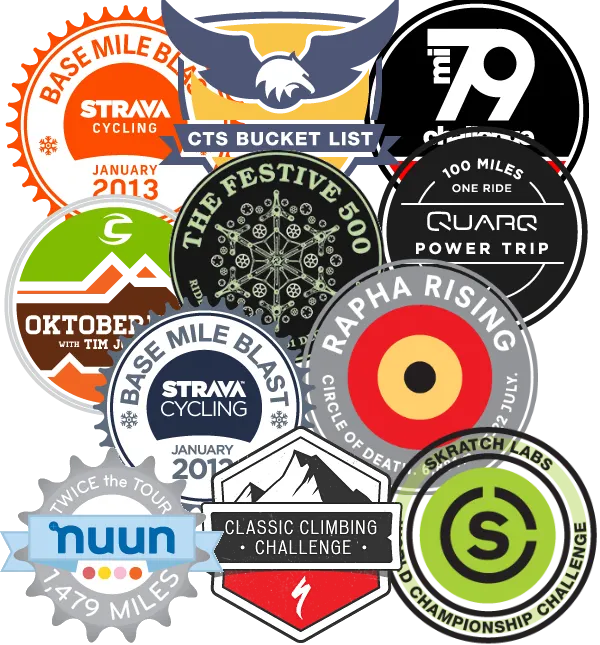
Challenges work well in a fitness context because fitness goals are naturally episodic. Most people do not maintain a single continuous focus on one fitness objective; they cycle through periods of higher and lower motivation, seasonal activity changes, training blocks, and recovery periods. A challenge with a defined endpoint suits that rhythm in a way that an ongoing leaderboard does not. You can complete a September running challenge, let October slide, and come back for a November one without the system treating the gap as a failure.
The opt-in structure is also meaningful. Joining a challenge is a small public commitment. It appears in your profile and your followers can see it which raises the perceived cost of not completing it. The social visibility of challenge participation creates a mild accountability effect that sits between the private pressure of a streak and the explicit accountability of a referee-style commitment contract.
Clubs: Social Architecture With Shared Context
Strava Clubs allow users to form groups around location, employer, sport, or shared interest, each with its own activity feed, leaderboards, and challenges. They are the community layer that sits above the individual social graph, and they serve a specific function in the retention architecture: providing a group context that makes individual activity feel more meaningful without requiring real-world coordination.
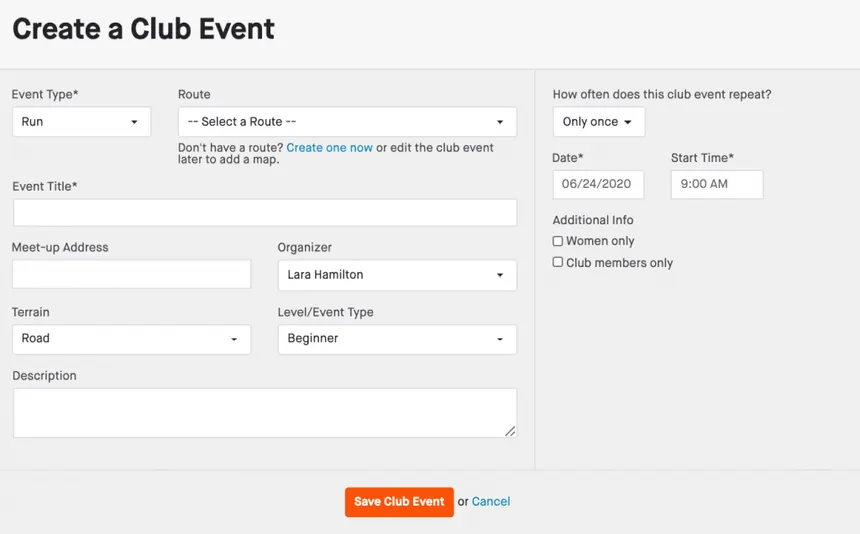
A runner who belongs to a local running club on Strava is not just tracking runs for themselves or competing against strangers on segments. They are contributing to a shared community record, visible to people they may actually know or interact with. The social stake of each activity is higher in a club context than in a general social feed, because the audience is more specific and the relationships are more meaningful.
Within Clubs, the social effect is likely stronger than in a general social feed, for the same reason that StickK's named referee produces stronger behaviour change than an anonymous leaderboard: personal social obligation outperforms diffuse social visibility.
Strava's Weekly Cadence: A Design Choice, Not A Default
Strava does surface streaks for subscribers tracking consecutive weeks of activity rather than consecutive days, which aligns with the activity rhythm of running and cycling. This is a meaningful configuration choice. A daily streak for running would break routinely for reasons outside most users' control: injury, travel, severe weather, recovery days. Each unintentional break reduces the streak's motivational value and risks converting a user who was genuinely engaged into one who feels the system is working against them.
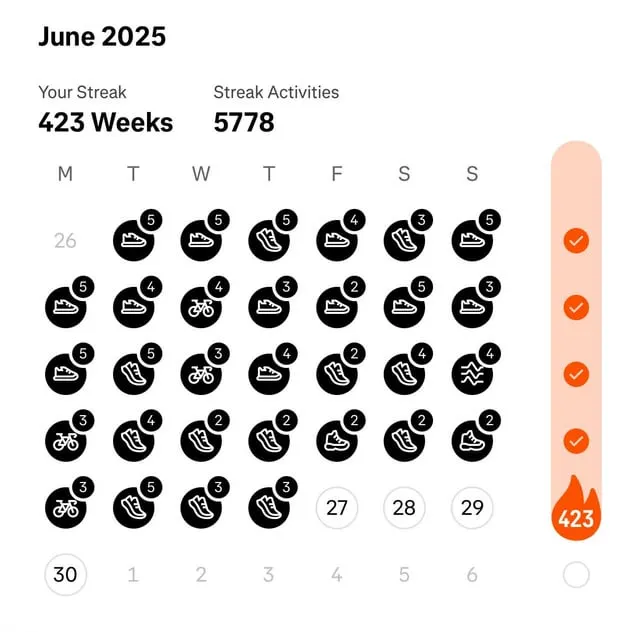
Weekly activity cadence gives users the buffer to manage a realistic training schedule while maintaining the consistency pressure that makes streaks useful. Trophy's platform data shows that weekly streak users show far less dependence on freeze functionality than daily streak users — because the longer period already accommodates the disruptions that daily streaks need explicit recovery mechanics to handle. Strava's choice of period is not incidental; it is the right calibration for an activity where rest and recovery are part of the programme.
Trophy streaks can run daily, weekly or monthly, with optional streak freezes, so you can match the period to the activity.
What Strava's System Teaches Product Teams In Fitness And Wellness
The consistent thread across every mechanic in Strava's gamification stack is that each one is calibrated to serve a specific user type or motivation without undermining the others. The KOM is for competitive athletes. The Local Legend is for consistent ones. Kudos is for everyone. Challenges suit users in episodic motivation cycles. Personal bests serve intrinsic improvers. Clubs serve community-oriented users. None of these mechanics is trying to serve all users simultaneously — they coexist in a way that gives different users different reasons to return.
Trophy's platform data supports the aggregate outcome of this architecture. Apps with visible, resettable leaderboards show meaningfully more competitive turnover than those without — the platform-level fingerprint of what Strava's social design produces at scale. But the social layer is the frame, not the whole picture. The underlying reason the social features work is that the competitive and achievement mechanics beneath them are calibrated to be winnable across the full distribution of users, not just the top percentile. Social context extends streak survival when users have something worth protecting. Strava's system is built to ensure they always do.
Frequently Asked Questions
What gamification features does Strava use? Strava's gamification system includes segments and leaderboards (including KOM/QOM for fastest times and Local Legend for most frequent completions), achievements and badges for personal bests and challenge completions, Kudos as a social validation mechanic, time-bound sponsored challenges, personal best tracking on benchmark distances and segments, and Clubs for group competition and community. The system is notable for offering parallel achievement tracks serving different user types simultaneously rather than a single competitive mechanic.
Why do Strava's segments work better than a global leaderboard? A global leaderboard only motivates users who can realistically contend for a high ranking — typically a small fraction of any large user base. Strava's segment system decomposes competition into thousands of local rankings, each containing only the athletes who have completed that specific stretch of road or trail. This means a cyclist who is average globally can still hold a meaningful local title. The competitive achievability scales with context rather than absolute ability, which is why the mechanic sustains engagement across a much broader ability range than a single platform-wide ranking would.
What is the Strava Local Legend and why does it matter for retention? The Local Legend laurel is awarded to the athlete who has completed a specific segment more times than anyone else in a rolling 90-day window. Unlike the KOM, it rewards consistency rather than speed, making it achievable regardless of athletic ability. It represents a second achievement tier in Strava's system specifically designed for users who would never compete for a performance-based title. Apps with only a single achievement difficulty level serve a narrow slice of their users well and the rest poorly — the two-tier KOM/Local Legend architecture is why Strava's competitive system sustains engagement across ability levels.
How does Strava's social layer affect user retention? Trophy's data doesn't isolate social visibility, but it does show competition is 3.4x higher on repeating leaderboards than on perpetual ones, so ranking design matters. Strava's Kudos, activity feed and Clubs add an audience on top, which raises the stakes of showing up: users who know their activity is visible to people whose opinions matter to them have more reason to stay consistent.
Should fitness apps use daily or weekly streaks? For running, cycling, and strength training, weekly cadence is generally better calibrated to the behaviour than daily. High-effort physical activities are interrupted routinely by factors outside users' control — injury, recovery, travel, weather — and a daily streak that breaks under those conditions is penalising users for circumstances unrelated to their motivation. Weekly periods maintain the consistency pressure that makes streaks useful while accommodating realistic training schedules. Strava's streak implementation for subscribers uses a weekly cadence for this reason, and Trophy's platform data shows that weekly streak users are substantially less dependent on freeze functionality than daily streak users.
How can I build a gamification system similar to Strava's for my fitness app? The build section above maps each Strava mechanic to a Trophy feature. In short: segment competition so achievability scales with user context, run parallel achievement tiers for different user types, and match your streak period to the realistic frequency of the activity. Trophy's Streaks API, Achievements API, and Leaderboards API handle the infrastructure for each of these. The docs cover full integration, and you can book a demo to discuss your specific use case.
Conclusion
Strava's gamification stack has been built and refined over more than a decade, but the underlying principle is transferable to any app where the core activity is physical, episodic, and social. The mechanics work because they are designed around the full distribution of users — not the engaged minority who would use the app regardless of what gamification layer sits on top of it, but the broader population whose consistency depends on having something specific to compete for, protect, or return to. That is the design problem worth solving, and it is one Trophy's platform data consistently shows has a measurable answer.
For the technical implementation of segmented leaderboards — and the engineering reasons why they are harder to build than a global ranking — see our guide to Strava's segmented leaderboard approach.
Get the latest on gamification
Product updates, best practices, and insights on retention and engagement — delivered straight to your inbox.
The gamification layer for consumer apps
Drop-in gamification features you can ship this sprint. Increase retention and user engagement without sacrificing your roadmap.
 Book a call